Pest Control
Fruit Flies, Fungus Gnats, or Drain Flies? Identify It First
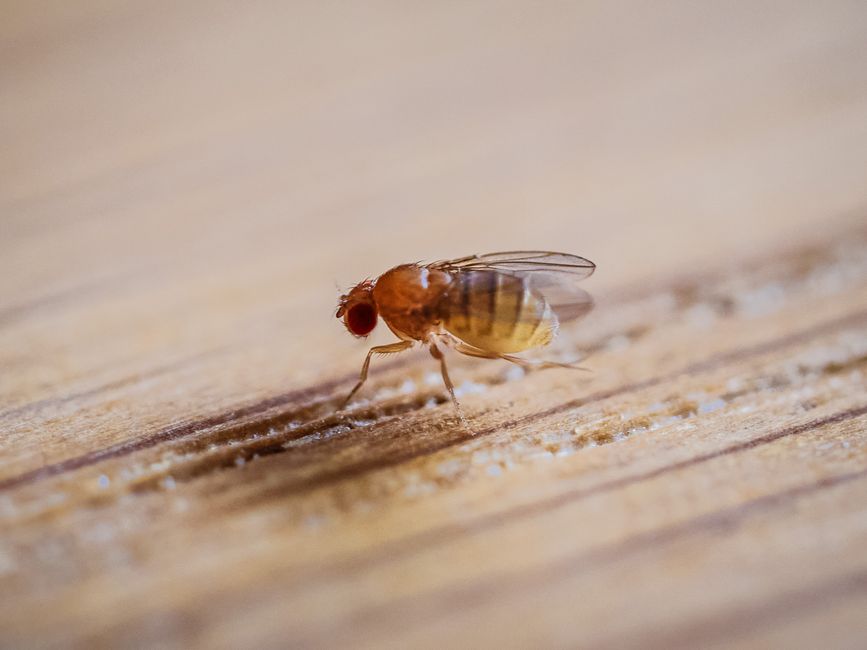
Almost everybody calls them all gnats. That is the whole problem. Fruit flies, fungus gnats and drain flies are three unrelated insects that breed in three completely different places, and every effective fix is aimed at a breeding site rather than at the insect. Treat the wrong one and you will do a lot of work for no result.
So before you buy anything, spend two minutes deciding which one you actually have.
Identify it by where it is, not by what it looks like
Fruit flies
Tiny, brown to yellowish, with red eyes, and about 2 to 3 mm long according to UC IPM. They hover. You will find them over a fruit bowl, around the bin, near the recycling, and by anything that has fermented - which includes the residue in a bottle you rinsed but did not wash.
Fungus gnats
Dark, delicate and mosquito-like, about 1/16 to 1/8 inch long, with long antennae and slender legs. UC IPM notes their larvae develop in moist organic debris or potting soil. They come off houseplants and drift toward light, which is why people notice them at windows and screens rather than at the plant that produced them.
Drain flies
Fuzzy, moth-like, and usually sitting perfectly still on a wall or ceiling near a drain rather than flying around the room. UC IPM describes their development in the slimy organic matter coating sink and shower drains, with eggs laid in moist to nearly saturated organic material.
Three different fixes
Fruit flies: remove the ferment. Overripe and dropped fruit, the film in the bottom of the bin, the recycling that was rinsed rather than washed, the gap under the dishwasher kick plate, and a mop bucket or bar mat that never quite dries. Refrigerate produce while you work through it. A shallow dish of cider vinegar with a drop of dish soap to break the surface tension is a reasonable monitor - it tells you whether you have found the source yet, and it is not a substitute for finding it.
Fungus gnats: stop overwatering. This is the whole answer for most households. UC IPM's guidance is that because fungus gnats thrive in moist conditions, you should avoid overwatering and provide good drainage. Let the top inch or two of potting soil dry between waterings, empty the saucers underneath, and clear the dead leaf litter off the soil surface. Where a bigger population needs knocking down, Bti products and Steinernema feltiae nematodes are commercially available soil treatments that target the larvae.
Drain flies: clean the drain, do not poison it. The larvae live in the biofilm coating the inside of the pipe, and pouring bleach down the drain rinses straight past that film without removing it. Mechanical removal is what works: clear and clean the trap, brush the inside of the pipe, then run it freely. UC IPM notes that regular use of an enzymatic drain cleaner can help prevent the organic buildup that gives moth flies a place to develop. Check the drains nobody uses - a spare bathroom, a floor drain, a basement laundry - because a dry or rarely-run trap is a classic source.
The honest part: this is usually not a job for a pest control company
We run a directory that recommends pest control companies, so it is worth saying clearly that this is normally not one of the problems you should hire one for. All three of these are sanitation and moisture faults, the fix costs nothing, and a treatment applied over an unfound breeding site will fail no matter who applies it. The National Pesticide Information Center makes the same point in general terms: target the larval stage by eliminating the breeding sites.
There are three situations where a call is genuinely worth it. You have done all of the above and fresh adults keep appearing, which means there is a source you cannot see. The flies are coming from a drain and you suspect the pipe itself - a cracked line or a failed seal under a slab is a plumbing problem with a pest symptom. Or the population is large enough and persistent enough that you want somebody with an inspection routine rather than another weekend of guessing.
If you are in the desert Southwest, one local note
Phoenix households get a version of this that surprises people who moved from wetter climates: the summer monsoon and heavy irrigation on desert landscaping create damp organic pockets outdoors that behave like a permanent breeding site, so indoor sanitation alone can plateau. If you have worked the list above and it has not held, the Phoenix crew we recommend has written up the local version, including the outdoor sources that keep a Valley kitchen restocked with gnats no matter how clean it is.
Common questions
How do I tell the three apart without a magnifying glass?
Watch where they are rather than what they look like. Fruit flies hover around ripening produce, the recycling bin and anything with sugar in it. Fungus gnats come off houseplants and drift toward windows and screens, and look like tiny dark mosquitoes. Drain flies sit still on the wall or ceiling near a sink, tub or floor drain, look fuzzy and moth-like, and fly in short clumsy hops rather than hovering.
Why does the spray from the supermarket not work?
Because it kills the adults you can see, and the adults are the smallest part of the population. All three of these breed in a wet medium you have not found yet - fermenting residue, saturated potting soil, or the film inside a drain. Kill every adult in the room and the same number emerges over the following days. The National Pesticide Information Center's guidance on nuisance flies is to target the larval stage by eliminating breeding sites, which is exactly why sanitation outperforms spray here.
Do I need to call a pest control company for this?
Usually not, and we would rather say so. These are sanitation and moisture problems, and the fix is normally free. The times it is worth a call are when you cannot find the source, when the population keeps returning after you have genuinely dealt with produce, plants and drains, or when a drain fly population points at something structural like a cracked drain line or a sewer defect under the slab.
Are any of them harmful?
None of the three bite. Fungus gnat adults do not damage plants or bite people and are considered a nuisance, though the larvae in large numbers can damage roots and stunt seedlings. Drain flies are a hygiene concern mostly because of where they have been. The real cost of all three is that they multiply fast and they are unpleasant to live with.
How long before it clears up?
Days rather than weeks, if you found the right breeding site. That is the useful diagnostic: if you have removed the source and there are still fresh adults a week later, you have not found the source - or you have found one of two.